Interoperability
The Repox Store boasts a robust REST API, underpinning all its features and ensuring seamless integration with external systems. This capability rightfully labels Repox as a "headless repository", offering comprehensive management through its REST API alone. By facilitating metadata export in JSON/XML formats and harnessing the OAI-PMH protocol, Repox guarantees enhanced data accessibility and compatibility, fostering wide-ranging interoperability. Designed with adaptability, Repox Store streamlines integration and data sharing with other platforms, laying the foundation for tailored digital solutions that align perfectly with organizational requirements.
Metadata standards The Repox Store is designed to enhance content accessibility using the Open Archives Initiative Protocol for Metadata Harvesting (OAI-PMH). This integration facilitates the extensive dissemination and exchange of metadata with other digital repositories and aggregators, ensuring heightened exposure and ease of access to resources. Specifically, metadata distribution via OAI-PMH is organized into sets, mirroring the archival material's collections. To ensure seamless integration and broad compatibility with other systems, the Repox Store adheres to the recognized Dublin Core standard and its extended version, the Qualified Dublin Core.
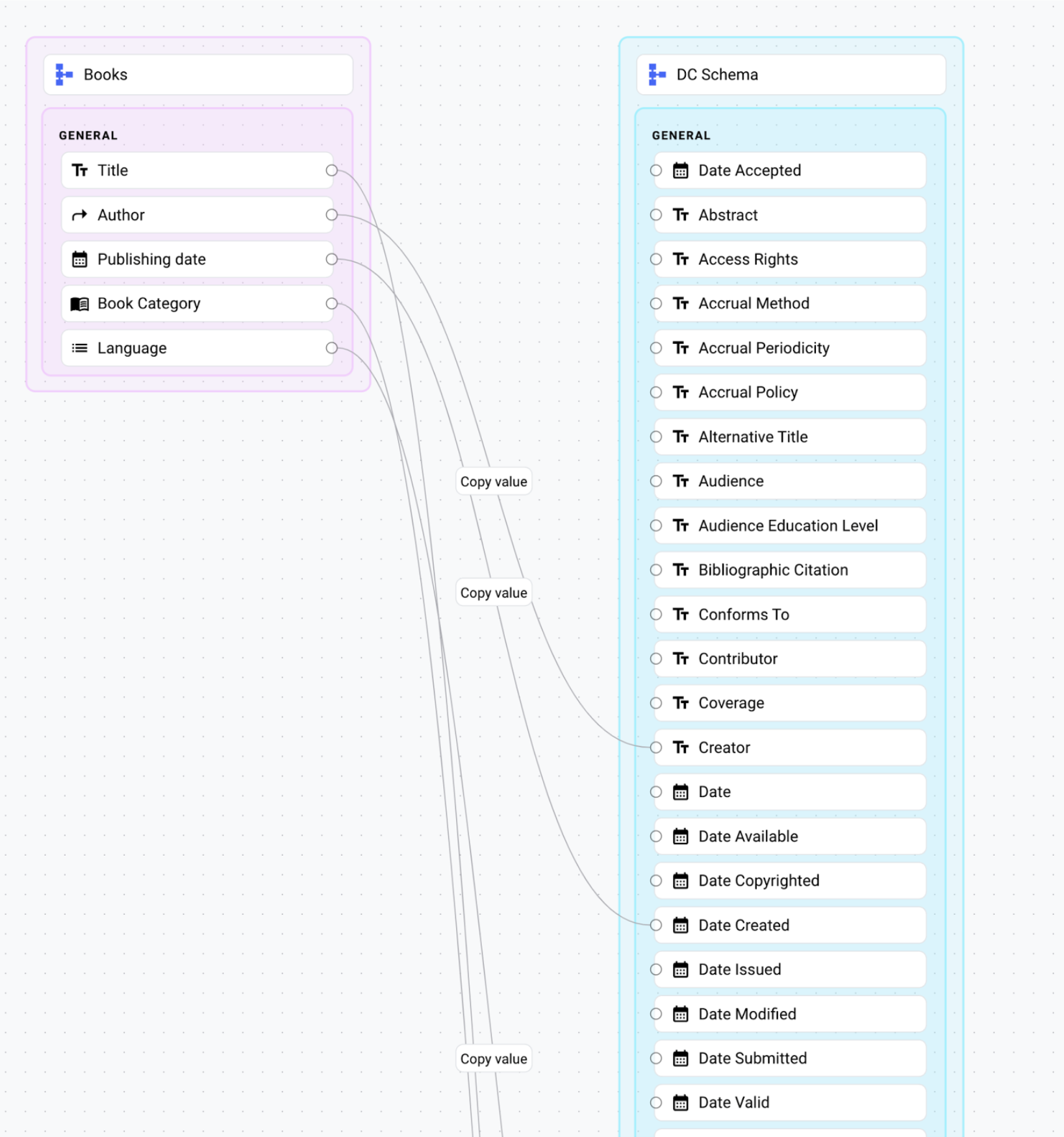
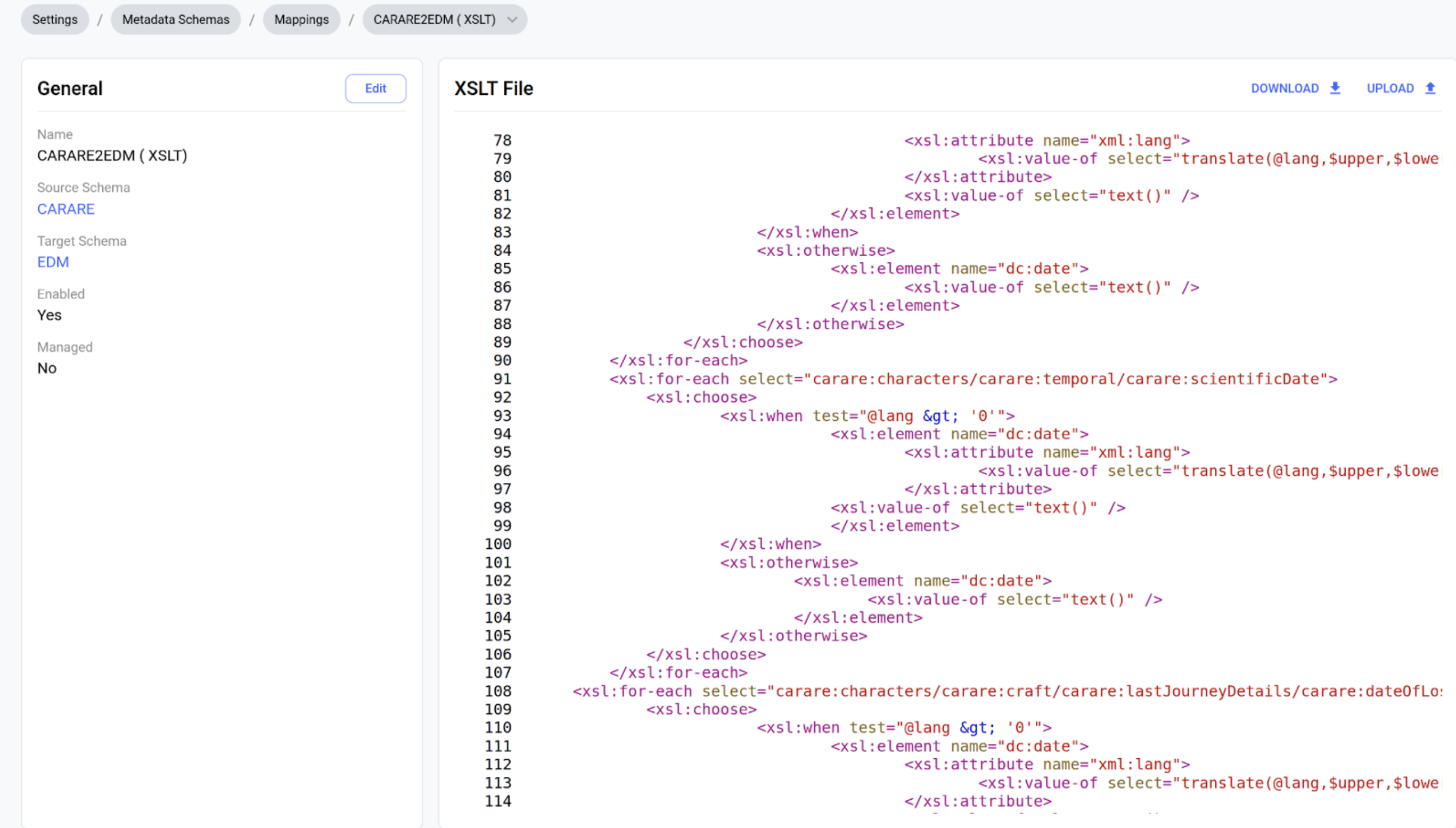
Crosswalks Repox uses the OAI-PMH protocol to distribute metadata, categorizing it into collections that mirror the organization of the archival material. This setup allows for the automatic generation and dissemination of metadata in diverse formats via the Metadata Crosswalks process, ensuring the data can be tailored to each system's specific needs. Prioritizing interoperability, Repox already incorporates the universally recognized Dublin Core and Qualified Dublin Core standards. Moreover, there are plans to expand support to include the advanced Europeana Data Model (EDM). Repox also excels in schema mapping, effectively translating one schema to another based on a universal data model. This can be done visually or by uploading an XSLT file, offering a versatile solution for data management.